Stuck Under-Sink Water Filter? How to Release Pressure
A stuck under-sink filter almost always isn’t corrosion or a bad design — it’s trapped line pressure holding the seal locked. Releasing that pressure first is the actual fix; forcing the twist harder is what cracks housings. Work through these steps in order rather than jumping straight to force.
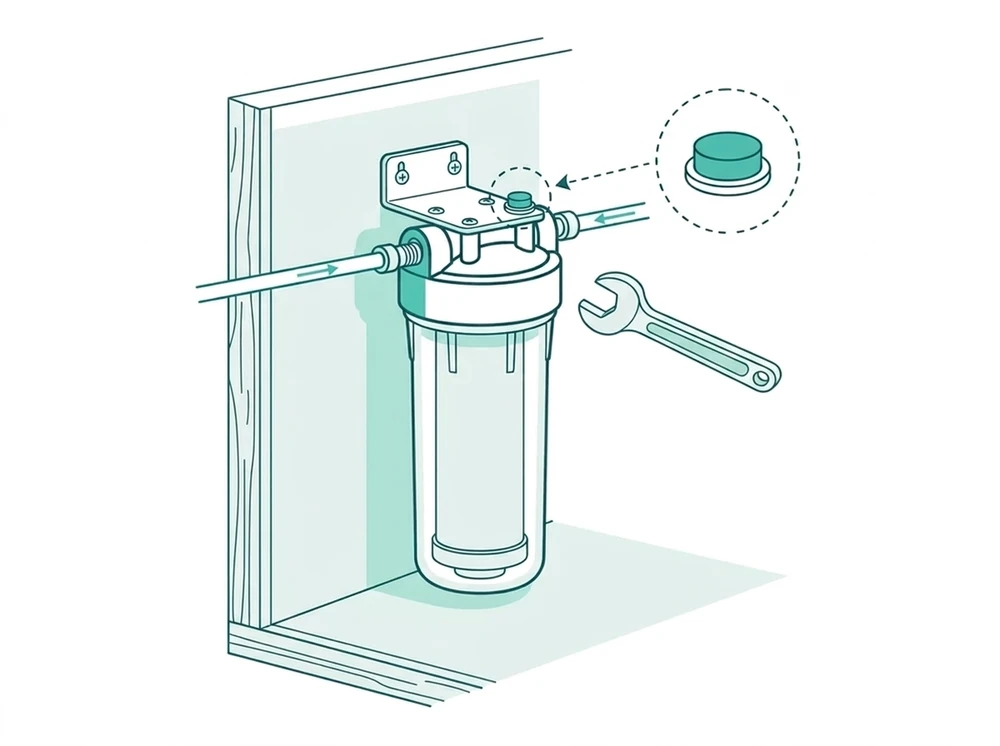
Step 1: Shut Off the Supply
Locate and close the cutoff valve feeding the filter housing before touching the cartridge. This is usually a small dedicated valve near the housing itself, separate from the main under-sink shutoffs for hot and cold. Skipping this step is the main reason people end up forcing a pressurized housing — without it, the line stays fully pressurized no matter how long you run the faucet afterward.
Step 2: Bleed the Pressure
Open the faucet that the filter feeds and let it run until the line is fully depressurized — you’ll typically see the flow taper from a normal stream down to a trickle and then stop as the residual pressure clears. Per Whirlpool’s own official guidance, this pressure-release step — dispensing water to relieve residual line pressure — is the documented fix for a filter that won’t budge, not a workaround.
Step 3: Attempt Removal With a Combined Technique
Once the line is depressurized, use a firm-but-controlled counterclockwise turn combined with a slight downward pull — not just twisting alone. This combined motion is what breaks the seal cleanly; twisting force without the pressure release first is what leads to housing cracks and can cause a mid-removal leak. If you’re using a strap wrench for extra grip, keep the same combined turn-and-pull motion rather than relying on the wrench to add raw torque.
Step 4: If It’s Still Stuck, Try Heat
Warming the housing/cap junction — a warm damp cloth, or a hair dryer on low for 20-30 seconds — can help release a seized O-ring seal or soften mineral buildup contributing to the stick. This is a supplementary step, not a replacement for releasing the pressure first; skipping straight to heat without depressurizing the line first won’t address the actual cause in most cases.
Step 5: Know When to Stop
Quarter-turn cartridges (like GE’s FQK1R and similar designs) can seize mid-turn, and this is a commonly reported pattern, not an official GE-confirmed defect. If a partial turn won’t complete after pressure release and heat, stop forcing it — continuing risks cracking the housing itself, which is a far more expensive part to replace than the cartridge. At that point, contacting support or a plumber is the right call rather than escalating to more force or improvised tools.
Why Filters Get Stuck in the First Place
The mechanism is the same one behind a slow-flowing dispenser after a fresh install, just showing up as the opposite symptom: residual water pressure in the line locks the seal in place, whether that seal is trying to seat (slow flow) or trying to release (stuck removal). Understanding that it’s a pressure issue, not a corroded or defective part, is what keeps people from reaching for more force as the first response — which is exactly what causes the expensive housing cracks this guide is trying to help you avoid.
Once your old filter is out, confirm you’re replacing it with the exact compatible cartridge for your under-sink system on the GE & Whirlpool Under Sink Water Filter Replacement Guide.
- Water Filters — Whole House & Under Sink Guides — find the right replacement for your under-sink system
- Fix a Stuck Refrigerator Water Filter — the same stuck-cartridge problem, for refrigerator filters instead of under-sink
Frequently Asked Questions
Why won’t my under-sink filter twist off even though I’m turning it hard?
Almost certainly trapped line pressure holding the seal locked, rather than corrosion or a seized thread. The housing stays pressurized after you stop using the faucet, and that pressure presses the cartridge against its seal with far more force than your hands can overcome. Turning harder does not release it and is what cracks housings and shears twist-lock tabs. The fix is to remove the pressure first. Close the dedicated cutoff valve feeding the housing, which is usually a small valve near the unit itself and separate from the main hot and cold shutoffs under the sink, then open the faucet the filter feeds and let it run until flow tapers to a trickle and stops. Whirlpool’s own guidance documents this pressure-release step as the fix, not as a workaround. Skipping the cutoff valve is the single most common reason people end up forcing a housing that is still fully pressurized.
Is it safe to keep forcing a filter that won’t complete its turn?
No. Forcing a quarter-turn cartridge past a point where it has stopped moving risks cracking the housing or shearing off the plastic twist-lock tabs, and either failure turns a five-minute filter change into replacing the whole assembly. It also tends to happen suddenly, with your hands in an awkward position under a sink. If the cartridge will not complete its turn, stop and treat it as a pressure problem rather than a strength problem. Shut off the supply valve, bleed the line through the faucet until flow stops, and try again with a firm but controlled counterclockwise turn combined with a slight downward pull. That combined motion breaks the seal cleanly, whereas twisting alone concentrates all the force on the lock tabs. If it still will not move after a genuine bleed, something else is wrong and more force will not find it.
Does this same pressure issue affect fridge filters too?
Yes. The same trapped-pressure mechanism sits behind two symptoms that look unrelated: a filter that will not come out, and a slow trickle from the dispenser after installing a new one. In both cases pressure in the line is working against you rather than any fault in the cartridge. It is useful to recognize the pattern, because the instinct in both situations is to blame the filter and buy another one, when the actual variable is pressure in the system. The remedies differ by appliance. Under-sink housings have a dedicated cutoff valve you can close before bleeding the line, while refrigerator filters are usually purged by dispensing water in short on and off bursts rather than one continuous stream. Our guide on a slow dispenser after a filter change covers the fridge case in detail.
Do I need any special tools to remove a stuck cartridge?
Not usually. Once the line is genuinely depressurized, the combined turn and downward pull works with hand pressure alone in most cases, and needing tools is normally a sign the pressure has not actually been released. A strap wrench can help if your hands are weak, wet, or you cannot get a decent grip in a tight cabinet, and it is the right tool to reach for because it spreads load around the housing rather than concentrating it. What to avoid is anything that grips a single point, such as pliers or a pipe wrench, since those crack plastic housings easily and leave marks that make the next change harder. If you find yourself reaching for a tool at all, go back and confirm the cutoff valve is fully closed and the faucet has run down to nothing first.
Sources: Whirlpool official — removing a stuck water filter, WaterFilterGuru — how to remove a stuck water filter.