Shark Vacuum No Suction? (Most Likely Causes, in Order)
No suction, or suction that’s dropped off, on a Shark vacuum is usually one of a short list of causes, and most take a few minutes to check without any tools. Work through these in order — they’re arranged from easiest and most common to least, so you’ll catch most cases before you get to the bottom of the list.
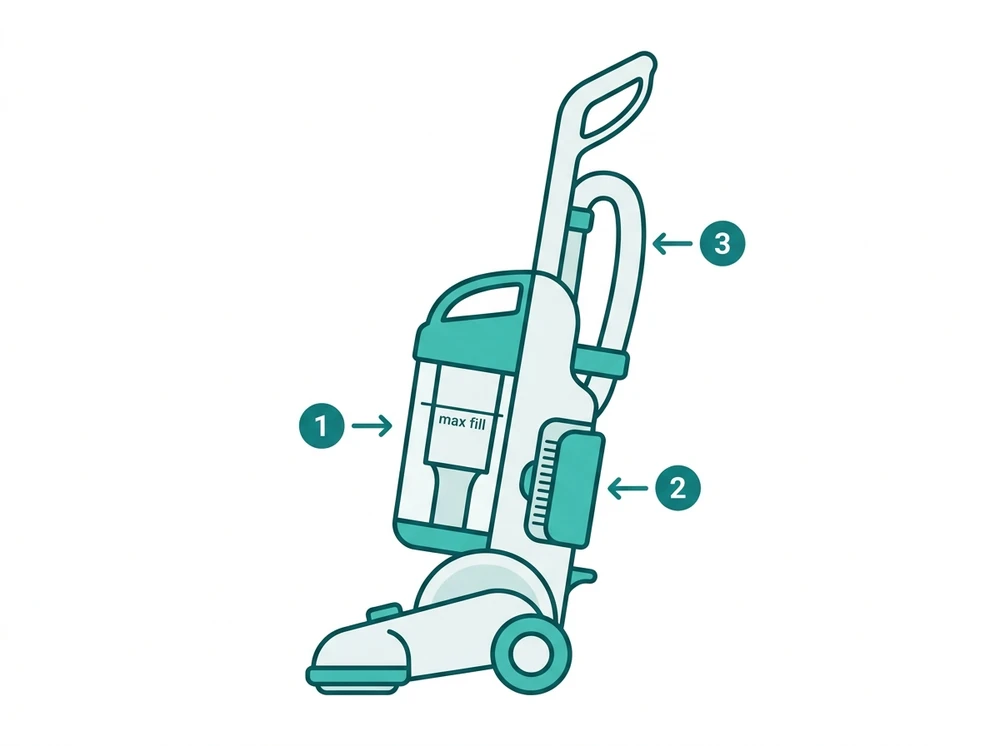
Check the Dust Cup First
Look at the “Max Fill” line on your dust bin. Past that line, airflow gets choked off even if the motor still sounds normal. Empty the bin completely and make sure the bottom door closes tightly and seals when it clicks back into place — a door that isn’t fully seated will leak air and cut suction on its own.
Clean the Filters
A dirty or clogged pre-motor filter is the single most common cause of poor suction in Shark vacuums. Remove the foam and felt filters from the dust cup housing, wash them under cold or lukewarm water only (no soap), and let them air-dry completely for at least 24 hours before putting them back — never reinstall a damp filter, since trapped moisture can damage the motor. For the full step-by-step process, see how to clean a Shark vacuum filter.
Check for a Blockage in the Hose or Wand
If the vacuum sounds like it’s running normally but there’s little to no suction at the floor, you likely have a clog somewhere in the airflow path rather than a filter problem. Detach the wand or hose from the floor head and turn the vacuum on: if you feel strong suction there, the blockage is in the floor head; if you don’t, the blockage is further upstream in the wand or hose. Shine a flashlight down the tube to spot the obstruction, and use a broomstick handle or similar to gently push it out.
Check the Brush Roll and Floor Setting
A brush roll that isn’t spinning won’t itself cause a drop in raw suction, but it does hurt pickup on carpet, which can feel like lost suction. Confirm the floor-type switch is set correctly for your surface. If the roller itself isn’t turning, that’s a separate issue with its own set of causes — see Shark vacuum roller not spinning for the full troubleshooting steps.
If suction stays weak after a full clean of the bin, filters, and airflow path, the filter itself may simply be worn out. Check your model against our Shark vacuum filter compatibility guide to find a verified-fit replacement.
Frequently Asked Questions
What’s the most common reason a Shark vacuum loses suction?
A full dust cup or a clogged pre-motor filter causes the large majority of suction complaints, and both take a few minutes to rule out with no tools. Start with the dust cup: if debris sits above the Max Fill line, airflow is choked even when the motor still sounds normal, and a bottom door that has not clicked fully shut will leak air on its own. Next, pull the foam and felt pre-motor filters from the dust cup housing. A dirty pre-motor filter is the single most common cause of poor suction on these machines. Wash both under cold or lukewarm water with no soap, then let them air-dry for at least 24 hours before refitting. Only after the bin and filters are genuinely clean is it worth investigating a blockage in the hose, wand, or floor head, which is the next most likely cause.
Can a full dust cup really cause suction loss?
Yes, and it is one of the easiest causes to miss because the vacuum still sounds completely normal. Once debris passes the Max Fill line marked on the bin, it restricts the airflow path before the air ever reaches the motor, so the motor keeps running at full speed while suction at the floor head drops away. Empty the bin completely rather than partially, then check the bottom door. A door that is not fully seated when it clicks back into place will leak air and cut suction by itself, which produces the same symptom as a full bin and is easy to overlook after emptying. Both checks take under a minute and need no tools. If suction is still weak with an empty, properly sealed bin, move on to the pre-motor filters, which are the next most common cause.
My Shark sounds normal but has no suction at the floor — what does that mean?
That combination almost always points to a blockage in the airflow path rather than a motor or filter problem. The motor is running freely because air is being stopped somewhere downstream of it. To find where, detach the wand or hose from the floor head and switch the vacuum on. If you feel strong suction at that point, the blockage is in the floor head itself. If you feel little or nothing, the obstruction sits further upstream in the wand or hose. Shine a flashlight down the tube to locate it, then push it out gently with a broomstick handle or similar, working from the end that gives the straightest path. Isolating the clog this way before dismantling anything saves taking apart parts that were never the problem, and it takes about a minute.
Will cleaning the filter fix suction for good?
Often yes, if a dirty filter was the actual cause, but cleaning is not a permanent fix because filter media wears out. Foam and felt pre-motor filters lose their structure over repeated wash-and-dry cycles, and a filter that has reached that point will not recover no matter how thoroughly it is washed. The practical test is a complete clean-and-dry cycle: wash with water only, air-dry for a full 24 hours, refit, and try again. If suction returns, dirt was the problem and routine monthly cleaning will keep it away. If suction is still weak after that, the filter is likely worn out rather than dirty and needs replacing, or the cause lies elsewhere in the airflow path, such as a blockage or an unsealed dust cup door. Check your model against a verified-fit replacement before buying.
Sources: SharkNinja support — HV166 suction troubleshooting FAQ and NV360 Series suction-isolation test.