How Often to Replace Your Coffee Maker Water Filter
Most coffee maker water filters need replacing every 2 to 3 months, but the exact interval depends on your machine type and your water. A drip machine’s charcoal filter wears out faster than a pod machine’s, and hard water or heavy daily use shortens the window further. Here’s the schedule by machine type, plus how to tell yours needs changing right now.
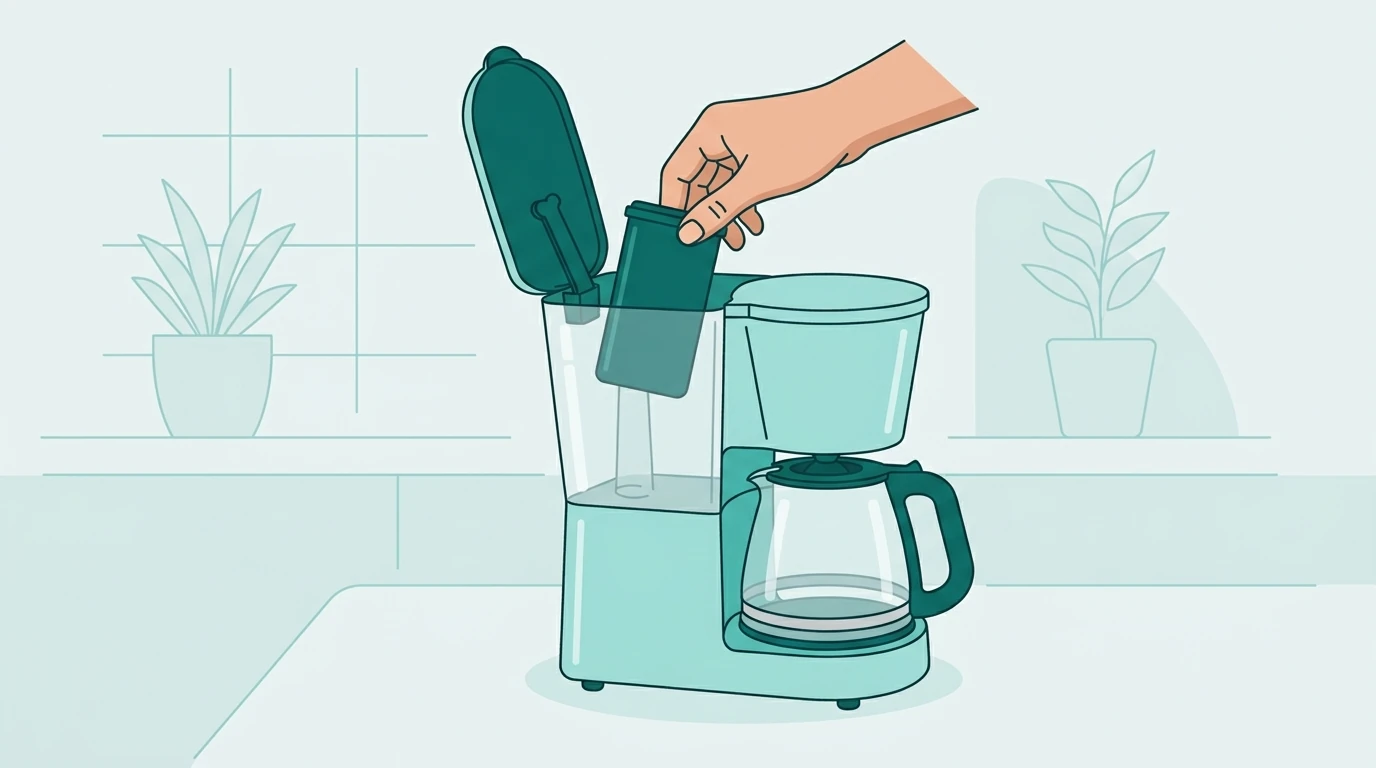
One quick note before the schedule: this is about the water filter cartridge that treats the water going into your machine, not the paper or cloth filter that holds your coffee grounds. If you’re trying to figure out whether you need a paper filter for your grounds, that’s a different question. This page is specifically about the charcoal water filter.
Replacement Interval by Machine Type
| Machine Type | Typical Filter | Replace Every |
|---|---|---|
| Drip machines (e.g., Cuisinart) | Charcoal cartridge in the reservoir | ~60 days |
| Pod machines (e.g., Keurig) | Charcoal cartridge, single-serve reservoir | ~3 months, or every 60 tank refills |
| Espresso machines | Charcoal or scale-inhibiting cartridge | 2-6 months, depending on use and water hardness |
Espresso machines have the widest range because water quality matters more for them mechanically. Hard water causes scale buildup inside the boiler, which affects both flavor and how quickly the machine heats up, so some manufacturers recommend changing sooner in hard-water areas even if the filter looks fine.
What Shortens the Interval
The table above assumes average tap water and normal daily use. A few things push the real-world interval shorter:
- Hard water. Minerals exhaust a charcoal filter’s capacity faster than soft water does. If you’re in a hard-water area, plan on changing closer to the 4-to-6-week mark rather than the full 2-3 months.
- Heavy daily use. Brewing multiple pots a day, or running a household coffee maker at office-level volume, pushes more water through the filter media and shortens its effective life regardless of the calendar.
- Slower flow or off taste. If water is coming through slower than usual, or your coffee starts tasting flat, chlorinated, or slightly off, that’s the filter telling you it’s exhausted. Replace it even if you’re ahead of schedule.
Do You Actually Need a Water Filter?
For most machines, no. A coffee maker will still brew without one. A water filter isn’t a functional requirement the way a paper grounds filter is; it’s there to improve taste and protect the machine, not to make it work.
Using a Keurig as the concrete example, since it’s the most common machine people ask this about: a Keurig runs fine without its water filter cartridge installed, especially if you’re already using filtered or bottled water in the reservoir. The filter’s job is to strip chlorine taste and odor out of tap water and reduce mineral scale buildup over time, which protects the machine and keeps the brew tasting consistent. That’s worthwhile if you’re filling the tank straight from the tap, and less necessary if your water is already filtered. A few compact single-serve models don’t even have a slot for a cartridge at all and rely entirely on whatever water you pour in. If yours needs a replacement, the official Keurig replacement cartridge 6-pack is the genuine part sized for 2.0 and newer brewers.
This is a direct link to a real listing, not an affiliate link; we don’t currently have a paid partnership with this retailer.
- Water Filters — Whole House & Under Sink Guides — compatibility guides for other water filtration systems
- All Guides & Troubleshooting — the full directory of filter guides across every category
Frequently Asked Questions
Does a coffee maker need a water filter to work?
No. The machine will brew perfectly well without one, because the water filter is a maintenance and taste component rather than a functional requirement. What it does is improve flavor by reducing chlorine and other taste-affecting compounds, and help protect the machine from mineral scale building up inside the boiler and water paths. Whether it is worth using comes down mostly to your water. In a hard-water area the scale protection is doing real work and skipping the filter shortens the machine’s life, while with soft water the benefit is mostly a matter of taste. Running without a filter is a legitimate choice, but it is worth descaling more often if you make it. What you should not do is leave an exhausted filter in place, since a spent cartridge provides no benefit while still restricting flow.
How do I know my coffee maker’s water filter needs changing?
Three signs, and the interval itself. Watch for water flowing more slowly through the machine, a flat or slightly off taste in the coffee that you cannot explain by the beans, and any visible discoloration of the cartridge. Alongside those, simply track the interval for your machine type: roughly 60 days for a drip machine, about 3 months or 60 tank refills for a pod machine, and anywhere from 2 to 6 months for an espresso machine depending on use and water hardness. The interval matters more than appearance, because a charcoal cartridge exhausts its capacity invisibly. A filter that looks fine can be doing nothing at all, which is why going by looks alone tends to leave people running spent filters for months. If in doubt, change it and note the date somewhere, since the date is far more reliable than your memory or the cartridge appearance.
Does hard water affect how often I should change it?
Yes, significantly. Hard water carries more dissolved minerals for the filter to trap, so its capacity is used up faster and the standard interval no longer applies. In a hard-water area, plan on changing every 4 to 6 weeks rather than waiting the full 2 to 3 months, and expect the shorter end of any range your manufacturer publishes. The effect is most pronounced on espresso machines, which is why their recommended range is so wide. Scale building up inside the boiler affects both flavor and how quickly the machine heats, so some manufacturers advise changing sooner in hard-water areas even when the filter looks perfectly clean. Heavy daily use compounds this, since interval guidance assumes average consumption. If you are on hard water and brewing several times a day, treat the published figure as an upper limit.