Fridge Filter Water Cloudy or Black? It’s Normal
Cloudy or black water right after a filter change is not a sign you got a bad filter — it’s two well-documented, harmless startup effects (leftover carbon fines and trapped air), and both clear with a simple flush. Here’s how to tell which one you’re seeing and how long it should take to clear.
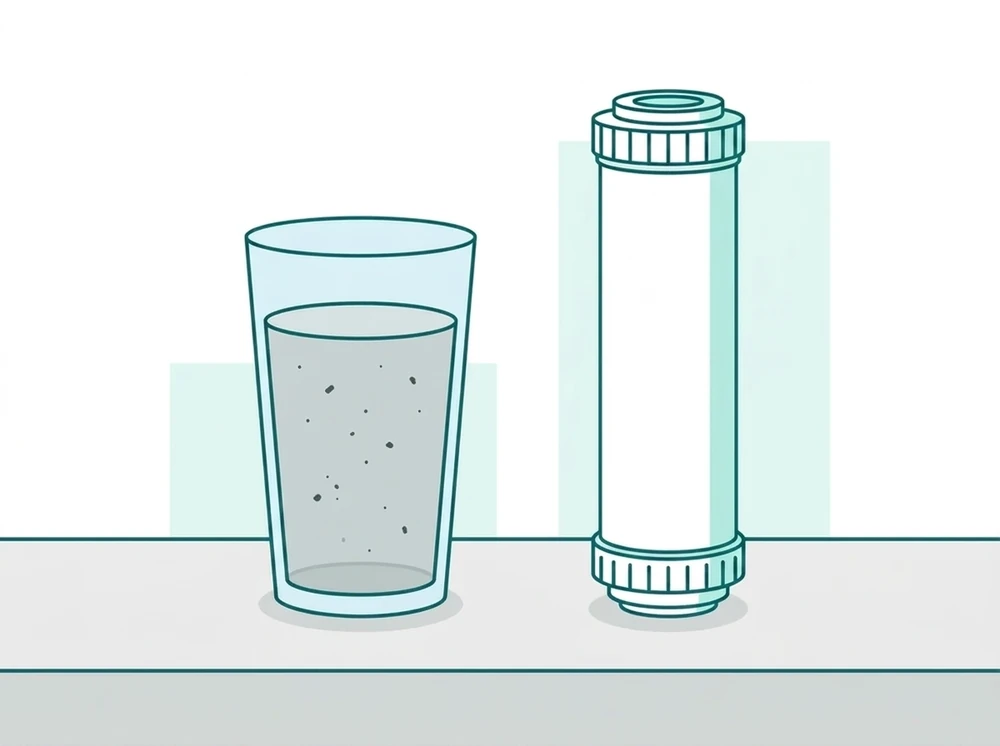
Step 1: Identify Which One You’re Seeing
Fine floating black or grey specks are carbon fines — harmless leftover particles from the manufacturing of the carbon filter media, confirmed directly by both GE and Whirlpool on their official support pages as a normal, expected byproduct, not contamination or a defective unit.
A uniform white or cloudy haze that clears if the glass sits still for a few seconds is trapped air. Installing a new filter introduces air into the water system, and that air escapes as fine bubbles during dispensing — which looks like cloudiness but is a completely different mechanism from the black-fines issue. The quick way to tell them apart: let a glass sit for 30 seconds. If it clears from the bottom up as bubbles rise out, that’s air. If fine dark specks are still visibly suspended or settle to the bottom, that’s carbon fines.
Step 2: Flush Per Your Model’s Instructions
GE’s own guidance: dispense 2-3 gallons of water, or run water for approximately 5 minutes, specifically to flush carbon particulates and air from the filter and distribution lines before judging water quality. Whirlpool’s guidance matches this approach, though the exact gallon requirement varies 1-4 gallons depending on the specific filter model — check your filter’s own instructions for the precise number. If your fridge only makes ice with no dispenser, GE recommends simply discarding the first batches of ice made after a filter change rather than following a special flushing procedure.
Step 3: Set the Right Expectation
This should resolve immediately after the recommended flush, or within a couple of days of normal use at the latest. Think of it as a one-time startup effect on a schedule, not an ongoing water-quality problem. Both manufacturers describe this the same way — it’s expected behavior baked into how carbon filter media is manufactured, not a sign anything went wrong with your specific installation.
Common Misconceptions
- “Black specks mean the filter is contaminated.” No — both GE and Whirlpool confirm this is leftover carbon media from manufacturing, not anything the filter picked up from your water supply.
- “Cloudy water means my water pressure is wrong.” Not necessarily — trapped air causes the exact same visual effect as a pressure issue, so don’t jump to troubleshooting your home’s water pressure before ruling out the simple flush first.
- “I need to install another filter if the first one seems off.” Almost never true in the first few days — a second filter won’t flush any faster than continuing to run the one you have.
Step 4: When It’s Not Normal
If cloudiness or particles are still present after the recommended flush volume, and haven’t improved within a couple of days of normal use, that points to an actual installation issue — not the expected startup carbon/air effect. At that point, check for an O-ring or seating problem rather than assuming you need another new filter. This is the same underlying seating/pressure family of causes covered in our guides on a slow dispenser after a filter change and a stuck filter that won’t remove — worth checking both if the flush alone doesn’t clear things up.
Now that your water’s running clear, confirm you’re on track for your next scheduled replacement — most fridge filters are on a 6-month cycle. Check your model’s exact schedule and part number on our Refrigerator Water Filter Finder.
Frequently Asked Questions
Are black specks in my water actually dangerous?
No. Both GE and Whirlpool confirm on their official support pages that fine black or grey specks are carbon fines, harmless leftover particles from manufacturing the carbon filter media. They are an expected byproduct of how activated carbon filters are made, not contamination and not a sign you received a defective cartridge. They clear with a standard flush and do not come back once the filter has settled in. The reason this alarms people is that it looks exactly like something has gone wrong, and it appears immediately after spending money on a new filter. The quick way to confirm what you are seeing is to let a glass stand for 30 seconds. Carbon fines stay visibly suspended or settle to the bottom. A uniform haze that clears from the bottom up is trapped air instead, which is a different and equally harmless startup effect.
How much water do I need to run to clear cloudiness?
GE’s general guidance is 2 to 3 gallons, or roughly 5 minutes of continuous dispensing, specifically to flush carbon particulates and air out of the filter and the distribution lines before you judge water quality. Whirlpool takes the same approach but the exact volume varies between 1 and 4 gallons depending on the filter model, so check the instructions that came with your specific cartridge rather than assuming a single number applies. Do not judge the water until the full flush is done, since the first glass will almost always look worse than the fifth. If your refrigerator makes ice but has no water dispenser, GE recommends simply discarding the first few batches of ice made after a filter change instead of following any special flushing procedure. That achieves the same thing through normal use.
The cloudiness hasn’t gone away after several days — what should I check?
That is past the normal startup window, so at this point it is worth treating as an installation problem rather than a flushing problem. Carbon fines and trapped air should clear immediately after the recommended flush, or within a couple of days of ordinary use at the very latest. If cloudiness persists beyond that, running more water is unlikely to change anything. Check that the cartridge is fully seated, which usually means a complete quarter-turn lock rather than stopping at the point where it first feels secure, and check that the O-ring is not pinched or rolled. A filter that feels installed while sitting slightly proud can leave the seal only partly compressed, which disturbs flow without producing an obvious leak. Our guides on a slow dispenser after a filter change and a stuck filter cover both checks in detail.
Will this happen again the next time I change the filter?
Yes, to some degree, and that is worth expecting rather than worrying about. Carbon fines and trapped air are produced by the act of installing any new cartridge, not by a fault in a particular one, so the same brief cloudiness or scattering of dark specks will appear each time you change the filter. It is a one-time startup effect on a repeating schedule. The practical takeaway is to build the flush into your filter-change routine rather than treating it as troubleshooting: fit the new cartridge, run the volume your filter’s instructions specify, and only then judge the water. Doing it in that order means you never find yourself wondering whether a perfectly good filter was defective. What is not normal is cloudiness that survives the flush and several days of ordinary use, which points to seating or a pinched O-ring rather than to normal startup behavior.
Sources: GE Appliances official — black particles in the water, Whirlpool official — cloudy water being dispensed.