How to Clean Your Range Hood Grease Filter
A greasy, clogged range hood filter doesn’t just look bad — it makes your fan work harder to pull the same amount of air, and heavy grease buildup is a real fire hazard. Most range hood grease filters are washable and don’t need replacing on any fixed schedule — they just need cleaning regularly.
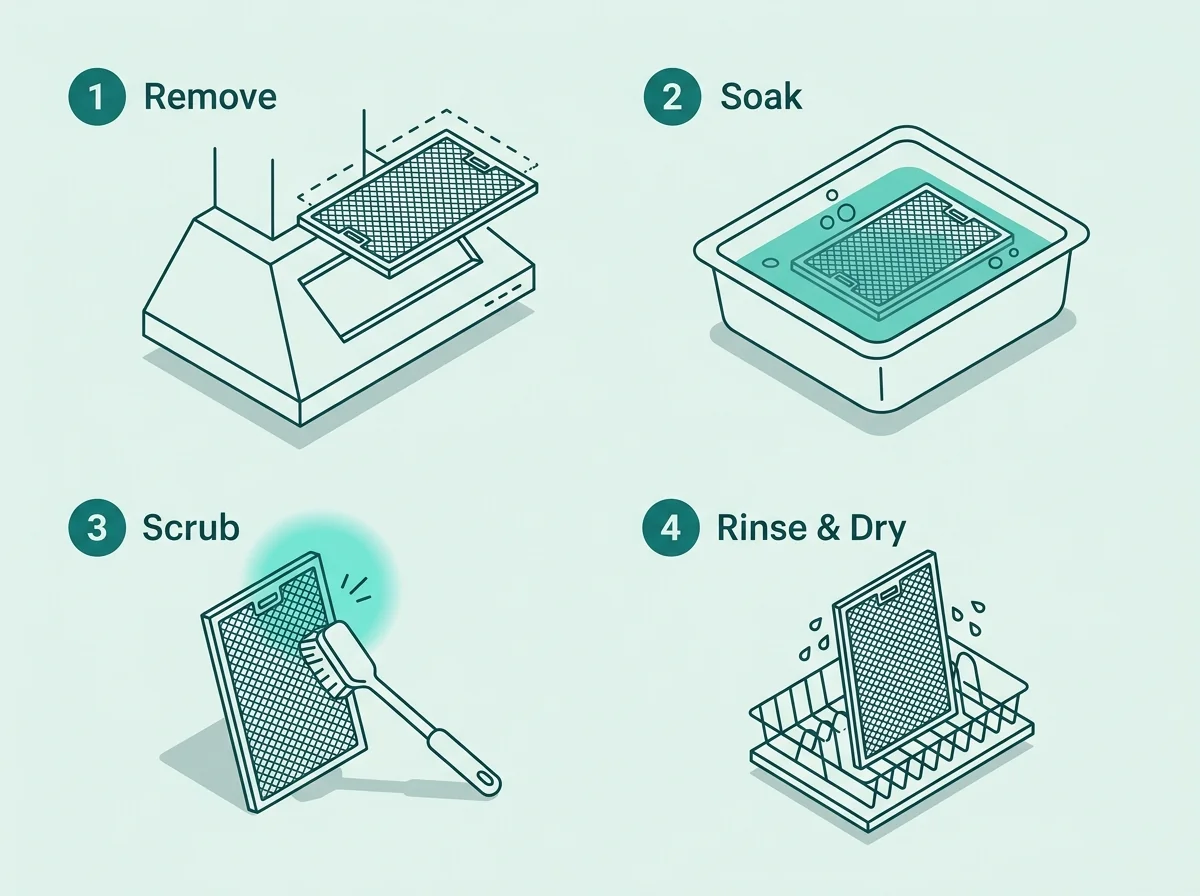
How Do You Clean a Range Hood Grease Filter?
Aluminum and stainless steel mesh or baffle grease filters can be cleaned two ways:
- Dishwasher: Most metal grease filters are dishwasher-safe. Run them on a hot cycle, ideally on their own or with minimal other dishes, since heavy grease buildup can leave residue on other items.
- Hand soak: Fill a sink or basin with hot water and a strong degreasing dish soap (or a dedicated degreaser). Soak for 10–15 minutes, scrub with a soft brush along the mesh or baffle grooves, then rinse thoroughly and air dry completely before reinstalling.
Never reinstall a wet filter — trapped moisture mixes with grease residue and speeds up buildup. Let it air dry fully first.
How Often Should You Clean It?
Every 1–3 months for typical home cooking. If you cook with a lot of oil, fry frequently, or use the hood daily, clean it monthly — grease buildup accelerates fan wear and reduces how effectively the hood pulls smoke and steam out of the kitchen.
When to Clean vs. When to Replace
Clean a metal grease filter regularly — it’s not designed to be replaced on a schedule. Replace it only if it’s visibly warped, the mesh is torn, or grease buildup has hardened to the point cleaning no longer restores airflow. A charcoal/carbon filter is different: it can’t be cleaned at all and should be replaced every 3–6 months regardless of how it looks, since its odor-absorbing capacity wears out even when it still looks fine. See our range hood filter replacement guide for finding the correct filter type and size for your hood, our dedicated step-by-step replacement guide when it’s actually time to swap the filter, and the Range Hood Filter Sizes guide to confirm your exact size before ordering a replacement.
Microwave over the range? On GE models the filter light is a timer: see how to reset the GE microwave Reset Filter light.
Frequently Asked Questions
Can I put my range hood filter in the dishwasher?
Most metal grease filters, aluminum or stainless steel mesh and baffle types, are dishwasher-safe and clean well on a hot cycle. Run them on their own or with minimal other dishes, because heavy grease lifting off the filter can redeposit as residue on everything else in the load. Charcoal or carbon filters are the exception and should never go in the dishwasher: they are not washable at all, and running one through will destroy it without cleaning it, since their odor-absorbing capacity is consumed rather than clogged. If you are unsure which type you have, metal grease filters are rigid, shiny, and obviously made of mesh or overlapping baffles, while carbon filters are dark, lighter in weight, and usually sit behind the grease filter. Whichever method you use, let the filter air dry completely before refitting it.
Why is my range hood filter still greasy after washing?
Heavy, hardened grease usually needs a longer soak or a stronger degreaser than a standard dishwasher cycle delivers, particularly if the filter has gone several months between cleans. Try a 15-minute soak in hot water with a dedicated degreaser or a strong degreasing dish soap, then scrub along the mesh or baffle grooves with a soft brush rather than across them, since the grease sits down inside those channels where a dishwasher jet never properly reaches. Repeat the soak rather than scrubbing harder, because aggressive scrubbing can distort thin aluminum mesh without shifting baked-on deposits. If a proper soak and scrub still leaves the filter greasy and airflow has not recovered, the buildup has likely hardened past the point cleaning can fix, which is one of the few genuine reasons to replace a metal filter.
Does a dirty grease filter affect how well my range hood works?
Yes, in two ways that matter. A clogged filter restricts airflow, so the fan works harder while pulling less smoke, steam, and odor out of the kitchen; you get more noise and more wear for less extraction. Over time that extra load accelerates fan wear, so a neglected filter costs more than a dirty filter. The second effect is the more serious one: heavy grease buildup in a filter sitting directly above a heat source is a real fire hazard, which is the reason regular cleaning is a safety task rather than a cosmetic one. Cleaning every one to three months covers typical home cooking, and monthly is more appropriate if you fry often, cook with a lot of oil, or run the hood daily. Cleaning takes minutes and is the single cheapest piece of range hood maintenance there is, which is why letting it slide is a poor trade against fan wear and fire risk.
Can I use vinegar or baking soda instead of dish soap?
They work on light buildup but are generally less effective than a dedicated degreasing dish soap on heavy, baked-on grease. A baking soda paste gives you mild abrasion that can help lift softened deposits, and a vinegar soak can loosen a light film, so both are reasonable if you clean the filter often and it never gets badly loaded. The limitation is chemistry rather than effort: grease responds to surfactants and heat far better than to a mild acid or a gentle abrasive, so on a filter that has gone months without attention you will spend considerably longer for a worse result. Hot water matters as much as what you dissolve in it. If you prefer to avoid detergents, extend the soak time rather than scrubbing harder. Heat and time do most of the work with any cleaning agent, and neither risks damaging the filter the way force does.
How do I know when a grease filter is too far gone to clean?
Three signs, and only three. If the mesh or baffle is visibly warped, if the mesh is torn, or if soaking and scrubbing no longer restore airflow because the grease has hardened into the media, cleaning will not bring it back and it is time to measure the filter and order a replacement. Short of those, a metal grease filter is not a consumable and is not meant to be replaced on any schedule, however unpleasant it looks before a wash. This is worth knowing because filters get thrown away long before they need to be. Charcoal and carbon filters work the opposite way: they cannot be cleaned at all and should be replaced every three to six months regardless of appearance, since their absorbing capacity is used up invisibly. Knowing which type you are holding decides whether cleaning is maintenance or a waste of an afternoon.
Why Cleaning Matters Beyond Airflow
Cooking is the leading cause of reported home fires and home-fire injuries in the U.S., according to NFPA research. Keeping a grease filter clean helps prevent grease accumulation in the hood airflow path; follow the hood manufacturer’s cleaning instructions. Keeping it clean is a real safety habit, not just a performance one.
How We Verified This
- Manufacturer care instructions from Broan-NuTone and other major range hood brands confirming dishwasher-safe status for metal mesh/baffle filters
- NFPA (National Fire Protection Association) home cooking fire statistics on grease as a fire-fuel source
- Cross-referenced cleaning method and frequency guidance against independent kitchen-appliance care resources
Where sources disagreed on a specific method or timeframe, we used the more conservative recommendation. Read our full verification methodology →
Looking for a different filter?
Fridge Filters · HVAC Filters · Vacuum Filters · Water Filtration
FilterFitNow may earn a commission on purchases made through links on this page — it doesn’t affect which filter we recommend. See our full affiliate disclosure.