How Often to Replace a Refrigerator Water Filter
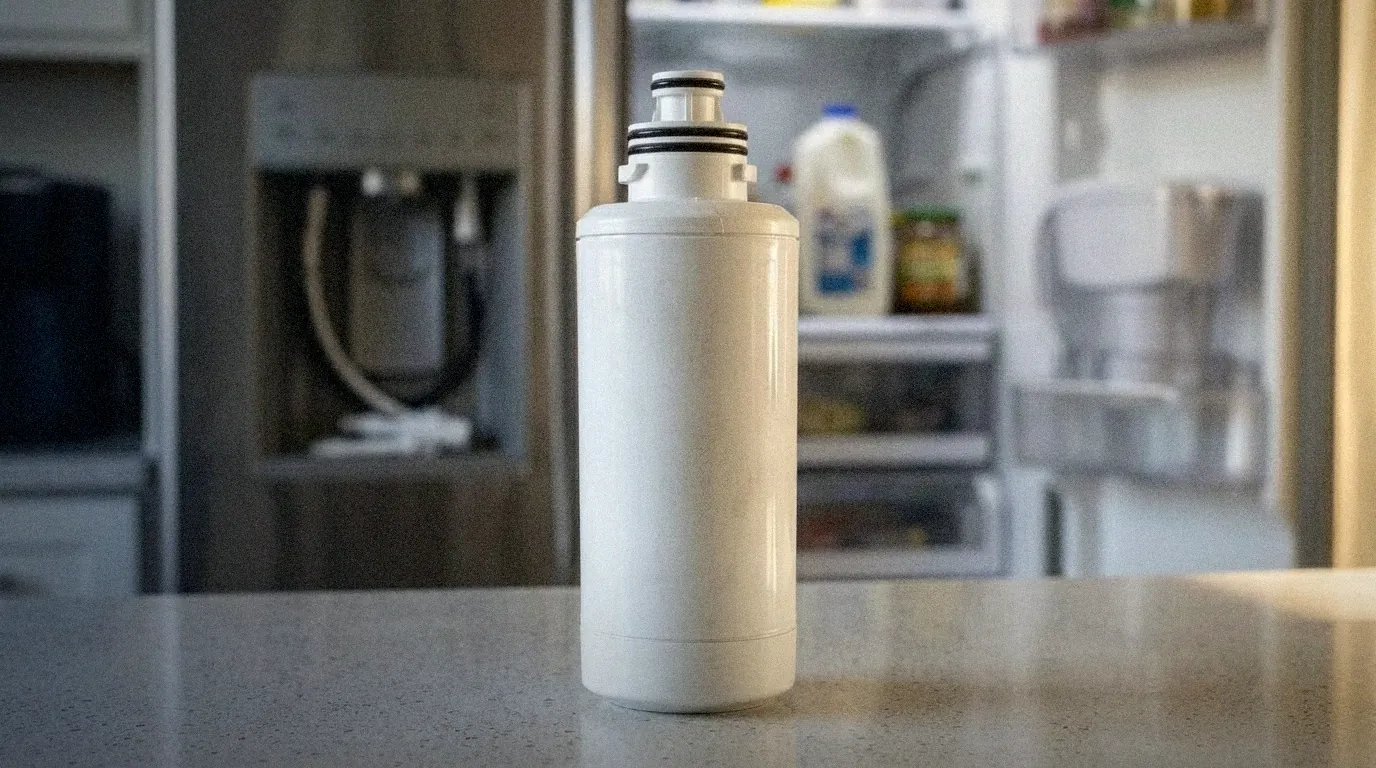
Most refrigerator water filters need replacing every 6 months, or after about 200 to 400 gallons of water, whichever comes first. That’s the manufacturer baseline across GE, Samsung, LG, Whirlpool and Frigidaire alike. But your actual household usage, water quality, and a few visible warning signs matter more than the calendar date on the box.
Replacement Interval by Household Usage & Water Type
The 6-month baseline assumes a typical household. Use this table to adjust for your own situation.
| Household Situation | Replace Every | Why |
|---|---|---|
| Average household (2-4 people, municipal water) | 6 months / ~200-300 gallons | Manufacturer baseline for most carbon filters |
| Large household or heavy dispenser use | 4-5 months | Reaches the gallon limit faster than the calendar date |
| Well water or hard water | 3-4 months | Higher sediment and mineral content clogs the carbon media faster |
| Fridge sits mostly idle (vacation home, light use) | 6 months regardless of gallons used | An idle, wet filter left too long grows bacteria even without heavy use |
Filter capacity is rated by both time and volume for a reason: a filter that hits its gallon limit in 3 months from heavy use is just as spent as one that sits for a full 6 months in a low-use household. Whichever limit you hit first is the real replacement point, not just whichever number is printed on the box.
Signs Your Filter Needs Changing Now
Skip the calendar and check the filter itself if you notice any of these:
- Slow water flow. A weak or trickling stream from the dispenser is the most common sign of a clogged filter restricting flow.
- Bad taste or odor. Water or ice tasting like chlorine, dirt, or metal means the carbon media has stopped adsorbing effectively.
- Small or hollow ice cubes. Reduced water pressure from a clogged filter changes how your ice maker fills, producing thinner or cloudier cubes.
- Visible particles. Specks of carbon or sediment appearing in a glass of water mean the filter media is breaking down, not just clogging.
- The indicator light. Most fridges track usage internally and turn on a reminder light well before the filter is fully spent — treat it as an early warning, not a hard deadline.
What Happens If You Don’t Change It
A filter left in too long doesn’t just stop improving your water — it can make things worse. Once the carbon media is saturated, it stops adsorbing chlorine and odors, and a wet filter that’s gone unused or overused for months becomes a place for bacteria to grow rather than a barrier against it. On the mechanical side, a clogged filter restricts water flow to both the dispenser and the ice maker, which is the most common cause of a slow-filling dispenser or small, hollow ice cubes that homeowners often mistake for an ice maker problem. None of this happens overnight. It builds gradually, which is exactly why checking against both a time and volume limit — not just waiting for something to go visibly wrong — catches it before it does.
Ready to replace yours? Make sure you buy the right filter first. Use our refrigerator water filter cross-reference chart to verify compatibility before you order, or check your model directly on the refrigerator water filter finder.
Frequently Asked Questions
How long does a refrigerator water filter actually last?
About 6 months or 200 to 400 gallons of filtered water, whichever comes first, for a typical carbon filter under average household use. Heavier usage, a large household, or well/hard water can push that down to 3-4 months since you’ll hit the gallon limit before the calendar date. On the other end, a fridge that sits mostly idle should still get a filter change around the 6-month mark regardless of how little water has passed through it, since an idle wet filter left too long becomes a place for bacteria to grow rather than a barrier against it. The two limits, time and volume, exist for different reasons, so treat whichever one you hit first as the real deadline rather than defaulting to just one of them.
Do I really need to replace it every 6 months, or can I stretch it longer?
You can technically stretch it, but the filter’s performance degrades well before it stops working entirely, so you likely won’t notice the drop-off until taste or flow visibly changes. Carbon media has a fixed adsorption capacity: once it’s saturated, it stops removing chlorine taste and odor even though water still physically passes through it, meaning an overdue filter can look and function normally while doing very little actual filtering. Stretching the interval also increases the risk of bacterial growth in a filter that’s been sitting wet and saturated for months. If cost is the concern, a compatible third-party filter verified for your exact model is a better lever than skipping changes, since it keeps the interval intact without paying OEM prices every time.
How do I know if my refrigerator water filter needs replacing?
Watch for slow water flow from the dispenser, a change in taste or odor toward chlorine or metal, ice cubes coming out smaller or hollow, or visible carbon specks in a glass of water — any one of these means the filter needs changing regardless of how long it’s been installed. Most fridges also track usage internally and light up a reminder indicator, which is worth treating as an early warning rather than the final word, since the light is calibrated to typical usage and may not reflect a household that’s well above or below average. Between the indicator light and a direct check of taste, flow, and ice quality, the physical signs are the more reliable signal when the two disagree.
What happens if you don’t change the refrigerator water filter?
Water quality drops first — the carbon media stops adsorbing chlorine taste and odor once saturated, even though water still flows through it, so you’re drinking effectively unfiltered water while assuming it’s still working. Mechanically, a clogged filter restricts flow to both the dispenser and the ice maker, which is the most common cause of a slow-filling dispenser or small, hollow ice cubes that get mistaken for a separate ice maker problem. Left long enough, a filter that’s gone unused or overused for months can also become a place for bacteria to grow rather than a barrier against it, since the wet carbon media provides exactly the environment bacteria need. None of this happens suddenly; it builds gradually, which is why checking against a fixed schedule catches it before it becomes a bigger issue.
Sources: manufacturer replacement guidance from Whirlpool, Frigidaire, and Samsung support documentation, cross-checked against independent filter-industry maintenance guides.
Related Filter Tools
Refrigerator filters are only one part of keeping your home’s water and air systems running right. Check compatible matches for your specific equipment:
- Refrigerator Water Filter Finder — match your fridge model to a verified replacement filter
- Refrigerator Water Filter Cross-Reference Chart — verify a compatible filter part number before you buy
- How Often to Change a Furnace Filter — the same kind of schedule, for your HVAC system
- Refrigerator Water Filter Stuck or Won’t Come Out — troubleshooting if your old filter won’t release
- Vacuum Filter Finder — find compatible filters for major vacuum brands