Heat Smells Musty When It Turns On? Here’s Why and the Fix
There are two different musty/sour smells people mean by this — a quick “burning dust” smell the first time heat kicks on after idle season, which is normal and self-clearing, and a persistent musty smell that keeps coming back, which is usually the filter, sometimes coils or the drain line. Tell them apart before assuming the worst, since the fix for one does nothing for the other.
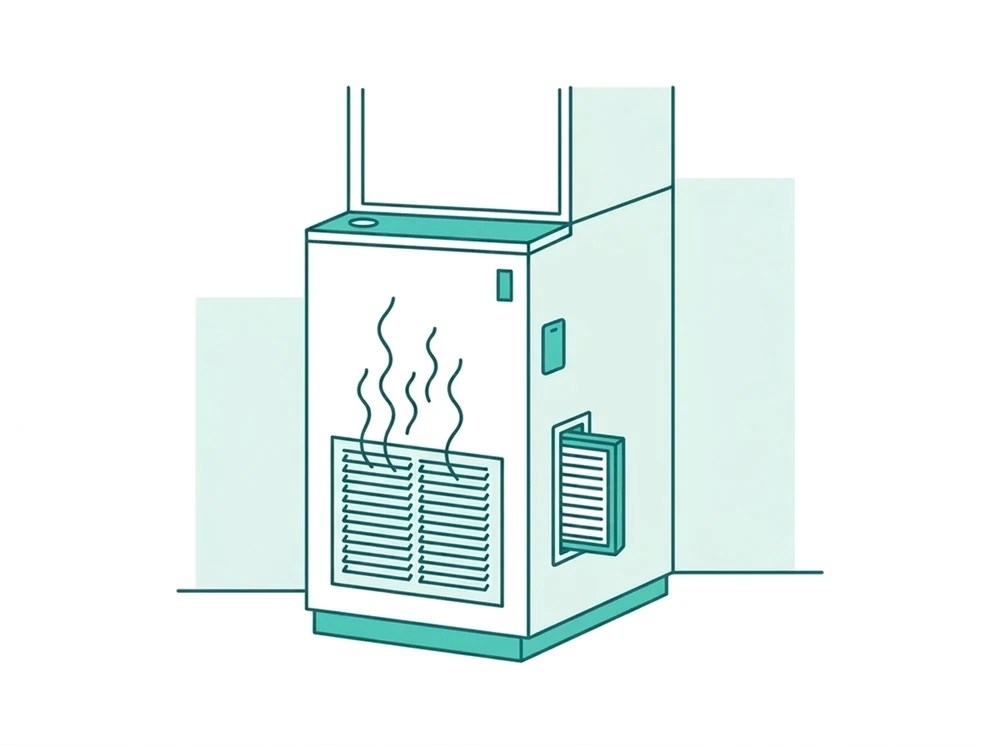
Step 1: Is It the First Heat Cycle of the Season?
A brief burnt-dust smell the first time your heat kicks on after months of AC-only or idle use is expected. Dust that’s settled on or near the heating element burns off when the system fires up, producing a temporary sour or burnt odor. Give it one or two heating cycles to clear before troubleshooting any further — this is a startup phenomenon, not necessarily a sign anything is wrong with your filter. It’s worth noting this smell is usually strongest right at the vents nearest the unit and fades noticeably by the second cycle; if it isn’t fading at all, that’s a sign to move to Step 2 rather than keep waiting it out.
Step 2: Check the Filter
If the musty smell is persistent rather than a one-time startup smell, a dirty or saturated filter is one of the most commonly cited causes. Dust, dirt, and debris trapped in the filter can themselves be the odor source, and a damp, dust-loaded filter creates ideal breeding conditions for mold and mildew — it’s not just restricting airflow, it can actively be growing the smell. Replace your filter on the standard roughly-3-month cycle, sooner if you have pets, allergies, or high dust levels in your home. A filter that’s visibly gray or matted, or that you can’t remember replacing this season, is reason enough to swap it before doing any further diagnosis.
Swapping the filter? Read the size printed on the old filter’s frame first (our air filter size chart explains nominal vs actual size). For the four most common sizes:
16x25x1 · 14x20x1 at Air Filters Delivered · 20x25x1 · 16x20x1 at Factory Direct Filters. Other sizes: use the HVAC filter finder. (Affiliate links: we may earn a commission at no cost to you.)
Telling the Two Smells Apart
- Burning-dust smell: shows up right when heat first kicks on for the season, fades within 1-2 cycles, smells more “burnt” than “musty.”
- Persistent musty/mildew smell: doesn’t fade with repeated cycles, smells damp or moldy rather than burnt, often tied to an overdue filter.
- Smoky, chemical, or electrical smell: neither of the above — this warrants having the system checked rather than waiting it out.
Step 3: If the Smell Persists After a Fresh Filter
If a new filter doesn’t resolve a persistent musty smell, the next likely causes are the drain line, evaporator coils, or ductwork — mold growth in the drain pan or on the coils is a common culprit at that point. This requires a professional inspection rather than a DIY fix; coil and duct cleaning are outside the scope of a filter swap, and attempting them without the right equipment can do more harm than good to the system.
Confirming you have the exact right filter size and are replacing it on schedule solves the most common cause. Check sizing on the Air Filter Size Chart. Not sure which filter type or MERV rating your furnace actually needs? See the full furnace filters guide.
Frequently Asked Questions
Is a burning smell when my heat first turns on dangerous?
A brief burnt-dust smell on the first heating cycle of the season is normal and expected. Dust settles on and around the heating element during months of idle or AC-only use, then burns off when the system fires up, which produces a temporary sour or scorched odor. It is usually strongest at the vents nearest the unit and should fade noticeably by the second cycle, so give it one or two cycles before troubleshooting anything. The useful distinction is whether the smell is fading. A burnt-dust smell that weakens each cycle is behaving exactly as it should. One that stays constant, or that smells musty and sour rather than dusty, is a different problem and points to the filter rather than to startup. A persistent burning or electrical smell that does not fade at all warrants shutting the system down and having it checked.
Can a dirty filter actually cause a musty smell, not just reduce airflow?
Yes, and this is the part people usually miss. A filter does not only restrict airflow when it loads up; it can become the odor source itself. Dust, dirt, and debris trapped in the media carry their own smell, and once that loaded filter also gets damp it creates close to ideal conditions for mould and mildew to grow directly in the media. At that point the filter is actively producing the musty smell rather than merely failing to stop it, which is why airflow can seem acceptable while the smell persists. That is also why replacing the filter is the first thing to try for a persistent musty odor rather than a later step. Replace on roughly a three-month cycle, and sooner with pets, allergies, or high household dust. A filter that is visibly grey or matted, or that you cannot remember changing this season, is reason enough to swap it before investigating anything else.
I replaced the filter and the musty smell is still there — what now?
At that point the filter almost certainly was not the cause, and continuing to swap filters will not help. The next places to look are the condensate drain line, the evaporator coils, and the ductwork, all of which can hold moisture and grow the same mould and mildew that a damp filter does, just somewhere you cannot see or reach. A blocked or slow drain line is a particularly common culprit because standing water sits in the system continuously. These checks generally require a professional, since they involve opening the air handler and working around the coil, and a coil cleaned incorrectly is easy to damage. Ruling out the filter first is still worth doing, because it is cheap, immediate, and eliminates the most common cause before you pay anyone. Mention that you have already replaced the filter when you call, since it narrows what the technician needs to check.
How do I know if my filter is actually the source of the smell versus just overdue?
In practice you cannot tell by smell alone, and the good news is that it does not matter. Once a filter is visibly grey, matted, or simply overdue, the correct action is the same either way: replace it. If it was the source, the smell goes away. If it was not, you have removed the cheapest and most common explanation and can move on to the drain line, coils, and ductwork knowing the filter is no longer a variable. Trying to diagnose a filter more precisely than that wastes time on a part that costs a few dollars and needed changing regardless. A useful rule of thumb: if you cannot remember replacing it this season, it is overdue, and that alone settles the question without any further investigation. Replacing it first also means that if you do end up calling someone, you are not paying a call-out fee to be told your filter was dirty.
Sources: Trane — does your air conditioner smell?, This Old House — air conditioner smells musty.