Furnace Filters: Types, MERV Ratings & Sizing Explained
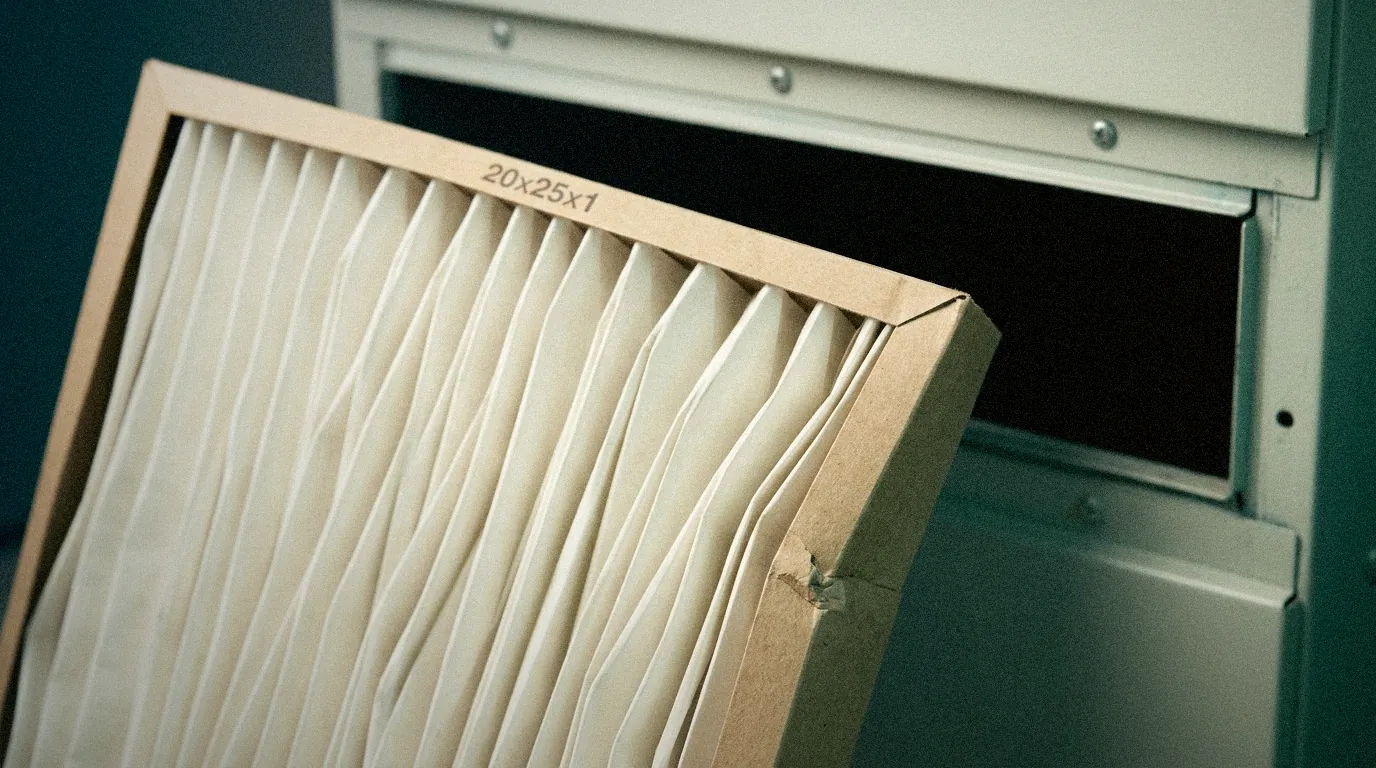
A furnace filter — often called a household air filter or HVAC filter — has one job: catch dust, pollen, pet dander, and other airborne particles before they pass through your blower and back into your home’s air. Get the wrong type, MERV rating, or size, and you either waste money on filtration your system can’t use, or restrict airflow enough to strain the blower. This guide covers what actually matters when choosing one — already know your size? Use our furnace filter finder to check compatible options.
What Does a Furnace Filter Actually Do?
Every forced-air furnace pulls return air through a filter before it reaches the blower and heat exchanger. The filter protects the furnace itself from dust buildup on internal components, and improves the air quality circulating through your home. A clean, correctly sized filter does both without meaningfully restricting airflow. A dirty, wrong-sized, or overly restrictive filter can do the opposite — starving the blower of airflow, which shows up as reduced heating performance, higher energy bills, or in worse cases, a furnace that short-cycles or overheats.
Types of Furnace Filters
Not every filter type fits every furnace, and higher filtration isn’t automatically better — a filter more restrictive than your specific blower can handle causes more problems than it solves.
- Fiberglass / panel filters: The cheapest, thinnest option (usually 1 inch), typically rated MERV 1–4. They protect the furnace from large debris but do little for air quality. Usually disposable, replaced monthly.
- Pleated filters: The most common residential choice. Folded fabric increases surface area, improving particle capture (typically MERV 8–13) without the airflow restriction of a flat filter at the same efficiency. Available in 1-inch and thicker 4–5 inch media-cabinet formats.
- Electrostatic filters: Use a self-charging synthetic material to attract particles in addition to physical filtration. Available disposable or washable. Washable versions cost less over time but need regular cleaning to stay effective — a neglected washable filter performs worse than a fresh disposable one.
- HEPA filters: True HEPA filtration (99.97% capture of 0.3-micron particles) is a hospital-grade standard, and most residential furnace systems aren’t built to handle the airflow restriction it creates. Installing one without confirming your system can handle it risks a strained blower motor and reduced heating performance. Some manufacturers sell “HEPA-type” or “HEPA-style” filters at a lower actual efficiency specifically to avoid this — check the specification, not just the label.
- Washable / reusable filters: Typically aluminum mesh or reusable electrostatic media. Lower ongoing cost than replacing disposable filters every 60–90 days, but need cleaning on schedule — every 1–3 months depending on household — to maintain their rated efficiency.
MERV Ratings Explained
MERV (Minimum Efficiency Reporting Value) is a standardized scale defined by ASHRAE Standard 52.2 that measures how effectively a filter captures particles of different sizes, from 1 to 16 for residential and commercial use. The higher the number, the smaller the particles a filter can capture — but also generally the more airflow resistance it creates.
MERV 8 vs. MERV 11 — which do you need? MERV 8 captures the majority of larger common particles (dust, pollen, lint) and is the standard baseline for most homes without pets or significant allergy concerns — it offers the lowest airflow resistance, easiest on older or standard-capacity blowers. MERV 11 captures a meaningfully higher share of smaller particles (pet dander, some bacteria, finer dust) at a modest increase in airflow resistance — a reasonable step up for households with pets or seasonal allergies, particularly with a thicker media filter rather than a restrictive 1-inch slot.
Can too high a MERV rating hurt your system? Yes, if your furnace’s blower isn’t rated to handle the added resistance. A too-restrictive filter makes the blower work harder to pull the same volume of air through, which can reduce heating efficiency, increase energy use, and in older or lower-capacity systems, contribute to overheating or premature blower wear. MERV 8–11 is a safe range for most residential furnaces; check your furnace’s manual before going higher.
How to Find Your Furnace Filter Size
The size printed on a filter (its nominal size, e.g. 16x25x1) is a rounded-up label, not the filter’s exact physical dimensions — actual dimensions typically run about ¼ to ¾ inch smaller in each direction to fit the filter slot properly. The fastest way to confirm your size is to check the size printed on the frame of your current filter, or measure the filter slot directly if none is available. For an exact size lookup and full nominal-vs-actual reference, see our chart of furnace filter sizes.
How Often to Change Your Furnace Filter
Most 1-inch filters need replacing every 60–90 days under typical household conditions — more often with pets or allergy sufferers in the home, or during heavy heating/cooling season; less often for thicker media-cabinet filters, which can often go 6–12 months. For the full breakdown by filter type and household situation, see How Often to Change Your Furnace Filter.
Signs Your Furnace Filter Needs Replacing
- Noticeably reduced airflow from vents
- Visible gray or brown discoloration and dust buildup on the filter surface
- Unexplained increase in energy bills
- Furnace short-cycling (turning on and off more frequently than normal)
- Increased dust or allergy symptoms in the home
How to Install a Furnace Filter Correctly
Every filter frame has an airflow-direction arrow printed on the edge. That arrow needs to point toward the furnace/blower — the same direction air flows when it’s pulled in and pushed through the system, not back toward the return-air grille. Installing a filter backward doesn’t block airflow entirely, but it does reduce filtration effectiveness, since pleated and electrostatic media are often designed to perform best with air moving through them in one direction.
Not sure which way that means for your specific setup — a return grille, an upflow or downflow furnace, or a filter with no arrow at all? See our full furnace filter direction guide for a setup-by-setup breakdown.
Furnace filters are located in one of two places: slotted directly into the furnace unit itself (most common, in a dedicated filter cabinet or slot near the blower), or mounted in a wall or ceiling return-air grille elsewhere in the house. Our Air Filter Size Chart covers how to identify your filter’s exact location in more detail.
Frequently Asked Questions
How often should a furnace filter be changed?
Every 60–90 days for a standard 1-inch filter under typical conditions. Homes with pets, allergy sufferers, or heavy furnace use during peak season should check monthly and may need to replace sooner. Thicker media-cabinet filters (4–5 inch) can often go 6–12 months.
Are cheap furnace filters as good as expensive ones?
Not for filtration performance — cheap fiberglass filters (MERV 1–4) mainly protect the furnace from large debris and do little for indoor air quality, while mid-range pleated filters (MERV 8–13) capture significantly more airborne particles at a modest cost increase. That said, a filter with a higher MERV rating than your furnace can handle can cause more problems than a well-matched mid-range filter.
What MERV rating is best for home use?
MERV 8–11 covers most residential situations well — MERV 8 for standard use, MERV 11 if you have pets or seasonal allergies. Going above MERV 13 in a standard residential system risks airflow restriction unless your specific furnace and ductwork are rated to handle it.
Can I use any furnace filter size, or does it need to be exact?
It needs to be close to exact. A filter that’s too small won’t seal the slot properly, letting unfiltered air bypass it; one that’s too large won’t fit at all. Nominal sizes are standardized, but always confirm against your specific slot or your filter’s printed size — see our air filter sizes chart for exact dimensions by nominal size.
What problems can a dirty furnace filter cause?
A clogged filter restricts airflow, which can reduce heating performance, increase energy bills, and in some systems cause the furnace to short-cycle or overheat. Over time, restricted airflow can also stress the blower motor.
Are furnace filters the same as household air filters?
Usually, yes — “household air filter” is commonly used as another name for a furnace or HVAC filter, and everything on this page applies. The term can also refer to the filter inside a standalone portable air purifier, which is a different product with its own filter types and sizing, not interchangeable with a furnace filter. This guide covers furnace/HVAC filters specifically.
Related Filter Tools
Choosing the right furnace filter is only one part of keeping your home’s air and water systems running right. Check compatible matches for your specific equipment:
- HVAC Filter Finder — find your exact size and MERV rating, cross-checked across retailers
- Air Filter Size Chart — nominal vs. actual dimensions for every standard size
- How Often to Change Your Furnace Filter — full replacement-schedule breakdown
- Refrigerator Water Filter Finder — match your fridge model to a verified replacement filter
Looking for a different filter?
Fridge Filters · HVAC Filters · Vacuum Filters · Water Filtration